As of January 20, 2026, the headlines are moving faster than a cold front in the North Atlantic.
When Geopolitics Gets Spicy at Your Doorstep
Here's something you probably didn't expect to read on a mortgage broker's blog today: Canadian troops might be heading to Greenland.
Yep, you read that right. The frozen island between Canada and Europe has suddenly become the hottest piece of real estate on the planet, and not because of climate change melting the ice caps (well, not just because of that).
President Trump has reignited his push to acquire Greenland from Denmark, and this time, he's not just floating the idea at press conferences. He's reportedly not ruling out military options and has threatened NATO allies with tariff increases of 10% by February 1st and 25% by June if they continue supporting European military presence on the island.
Wild times, eh? Let's break down what's happening and: more importantly: why you should care about this if you're a Canadian homeowner staring down a mortgage renewal in 2026.
The Greenland Situation: A 3-Minute Breakdown
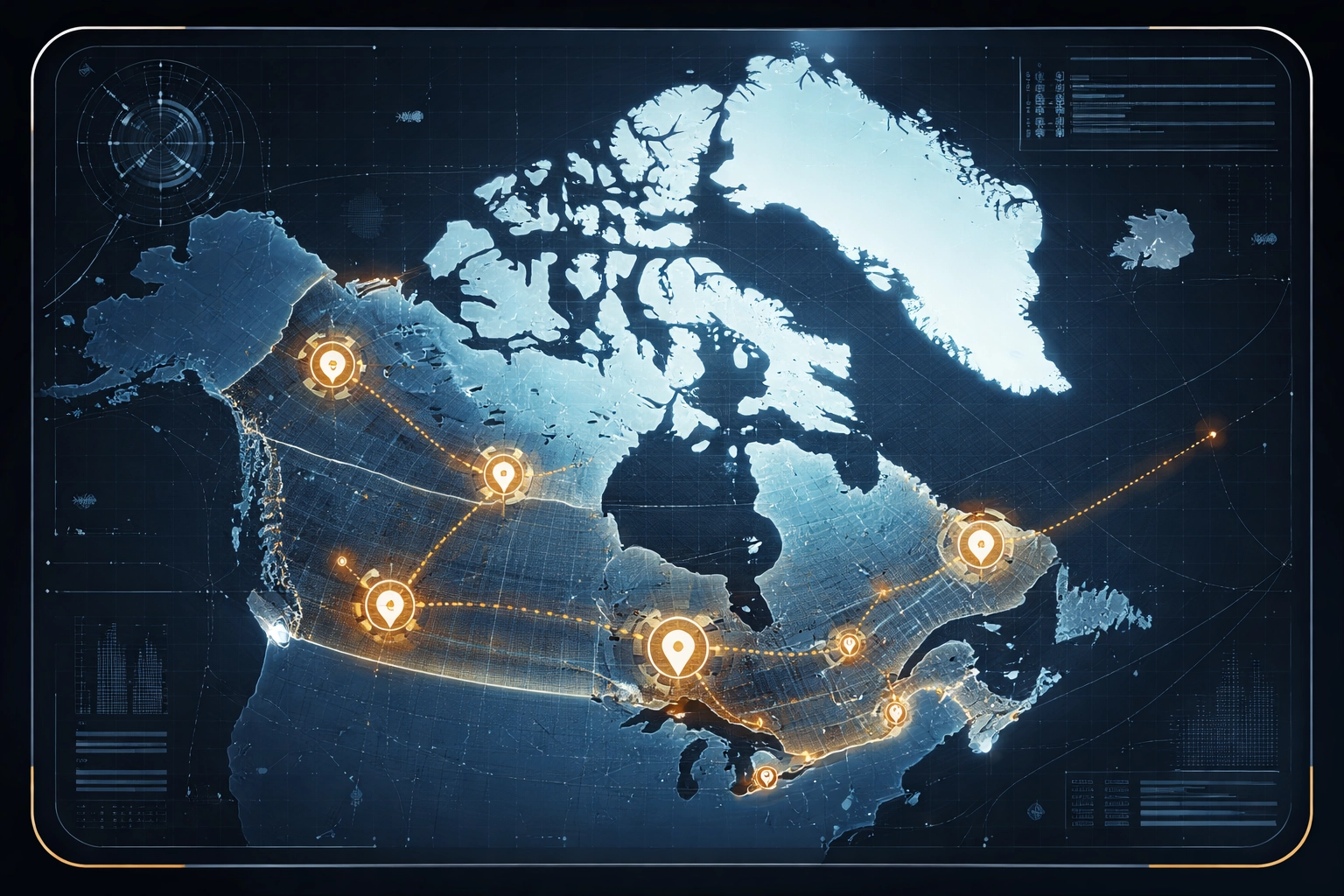
What Trump wants: Control of Greenland. He's argued that only the U.S. can adequately protect the strategically important Arctic territory from Russian and Chinese encroachment. His position? The current American presence at Pituffik Space Base (where a $25 million upgrade is already in the works) isn't enough.
What Denmark says: "Not for sale." Greenland is an autonomous territory of Denmark, a NATO ally that has made its position crystal clear. Only 8% of Americans actually support using military force to take Greenland, and just 28% support the idea of "buying" it. But that hasn't cooled the rhetoric.
What NATO is doing: Denmark and seven European NATO allies (UK, Germany, Sweden, France, Norway, Netherlands, and Finland) have already deployed military reinforcements to Greenland as part of Operation Arctic Endurance. As of mid-January 2026, approximately 100 Danish soldiers arrived in Nuuk first, with additional troops later deployed to Kangerlussuaq. Danish and French jets are conducting training missions over Greenland. Germany has even proposed a permanent NATO mission called Arctic Sentry.
Where Canada comes in: Prime Minister Mark Carney is weighing the option of sending Canadian troops to Greenland for NATO military exercises. It's a show of solidarity with Denmark and our NATO allies, basically Canada saying, "We stand with you, not with territorial threats."
But here's the tricky part: Canada is already dealing with Trump's tariff threats. Sending troops to Greenland could pour gasoline on an already tense Canada-U.S. relationship.
Why the Arctic Matters More Than You Think

Greenland isn't just a massive ice sheet. It's strategically positioned for:
- Arctic shipping routes that are opening up due to climate change
- Military positioning between North America, Europe, and Russia
- Natural resources including rare earth minerals essential for tech and EV batteries
For Canada, this hits close to home. We have our own Arctic sovereignty concerns, and any instability in the region directly affects our national security and economic interests.
But let's get to what you're really here for: your money.
Tariffs, Trade Wars, and Your Interest Rate
Here's where it gets real for Canadian homeowners.
The Elephant in the Room: A Strained Canada-U.S. Relationship
Let’s say the quiet part out loud: this isn’t just a Greenland story. It’s a Canada-U.S. relationship story: and the long-term fallout can get messy.
Canada is basically stuck between a rock and a hard place:
- On one side, you’ve got NATO solidarity. Denmark is an ally, and when allies get leaned on, Canada can’t exactly shrug and say “good luck, eh.”
- On the other side, you’ve got the U.S.: our biggest trading partner. And when Washington starts talking tariffs (10% by February 1st and 25% by June), it’s not just political theatre: it’s leverage with a price tag.
The long-term risk is diplomatic whiplash. If Canada supports Denmark (as NATO expects) and the U.S. takes it personally, the relationship can fracture in a way that doesn’t heal fast. Trade talks get crankier. Cross-border business planning gets weird. And markets? Markets hate weird.
That’s where the “fun” part comes in: market jitters.
When investors see Canada caught in the middle, they start pricing in risk. That can show up as:
- Volatility in the Canadian dollar (CAD) (because trade + confidence drive currency moves)
- Bond market swings, which can filter into fixed mortgage rate pricing
- A tougher, more uncertain backdrop for Bank of Canada decisions, which affects variable rates
Translation: you can be minding your own business, trying to plan a renewal, and suddenly geopolitics is messing with your rate quote. Cool.
What smart homeowners do (1 min): if you’re within 120 days of renewal, get a rate hold and a plan. If you’re farther out, run scenarios now so you’re not scrambling later if headlines turn into rate volatility.
Trump's threat to slap 10-25% tariffs on NATO allies isn't just diplomatic posturing: it's economic warfare. And when our largest trading partner starts throwing around tariff threats, the ripple effects hit the Canadian economy hard.
Interestingly, this isn't just a partisan shouting match: even some Republicans have publicly condemned the Greenland tariff threats, showing that the economic stakes are high enough to cause friction within the President’s own party.
What happens when tariffs increase:
- Canadian exports get more expensive for American buyers
- Canadian businesses lose revenue and may cut jobs
- Consumer confidence drops as uncertainty rises
- The Bank of Canada has to react to protect the economy
When the BoC sees economic uncertainty and potential slowdowns, they have two options: hold rates steady to control inflation, or cut rates to stimulate growth. Either way, market uncertainty makes it harder to predict where your mortgage rate is heading.
And if you're one of the estimated nearly 1.2 million Canadians facing mortgage renewals in 2026: the so-called "renewal cliff": this unpredictability is the last thing you need.
The 2026 Renewal Cliff Just Got Steeper
Let's put some numbers on this.
If you locked in a 5-year fixed mortgage in 2021 at around 1.89%, you're likely renewing into rates between 4.5% and 5.5% depending on market conditions. On a $500,000 mortgage, that could mean an extra $800-$1,200 per month in payments.
Now add geopolitical uncertainty to the mix:
- Trade tensions could push the Canadian dollar lower, making imports more expensive and fueling inflation
- Higher inflation means the Bank of Canada might hold rates higher for longer
- Economic slowdowns from tariff impacts could lead to job losses, making it harder to qualify for refinancing
The point isn't to panic: it's to plan.
What Smart Homeowners Are Doing Right Now
Here's what we're telling our clients at Kraft Mortgages:
1. Know Your Numbers Before Renewal
Don't wait until your lender sends you that renewal letter with whatever rate they feel like offering. Use our mortgage calculator to understand what different rate scenarios mean for your monthly payments.
2. Explore Your Options Early
120 days before renewal is the sweet spot. That's when you can start rate shopping without penalty. A 0.25% difference on a $500,000 mortgage over 5 years? That's roughly $6,000 in savings.
3. Consider Your Term Length
With this much uncertainty, a shorter-term mortgage (2-3 years) might make sense if you believe rates will drop. But if you want stability, locking in a 5-year fixed protects you from whatever geopolitical chaos unfolds next.
4. Stress Test Your Budget
The federal stress test requires you to qualify at the contract rate plus 2% (or 5.25%, whichever is higher). But you should stress test your own budget too. Can you handle payments if rates rise another 1%? If tariffs cause economic slowdown and your income drops?
5. Talk to a Broker, Not Just Your Bank
Banks offer their products. Brokers offer the market. When conditions are this uncertain, having access to 50+ lenders means you're more likely to find the right fit for your situation.
The Bottom Line: Global Events Hit Your Wallet
Look, we're not foreign policy experts. We're mortgage brokers. But here's what 15+ years in this industry has taught us: global events don't stay global for long.
When Trump threatens tariffs, Canadian businesses feel it. When trade tensions rise, our dollar reacts. When our dollar moves, inflation shifts. When inflation shifts, the Bank of Canada adjusts rates. And when rates adjust, your mortgage payment changes.
The Greenland situation might seem like a bizarre headline from a geopolitics subreddit. But for Canadian homeowners: especially those facing renewals: it's another variable in an already complicated equation.
What You Can Do Today
If you're renewing in 2026: Contact us to review your options before that renewal letter arrives. The earlier you start, the more leverage you have.
If you're buying or refinancing: Use our affordability calculator to understand what you can actually handle in different rate scenarios.
If you're just watching the news and wondering: That's fair. Keep watching. But also keep planning.
Because whether it's Arctic troops, tariff threats, or whatever wild headline drops next week, the homeowners who come out ahead are the ones who prepared for uncertainty: not the ones who waited for things to "settle down."
Spoiler alert: things rarely settle down.
Have questions about how current market conditions affect your mortgage strategy? Speak with our team directly at Kraft Mortgages Canada Inc. We specialize in navigating complex situations: whether that's tricky income documentation or geopolitical chaos.
About Varun Chaudhry
Licensed mortgage broker with over 18+ years of combined experience in the Canadian mortgage industry. Specializing in MLI Select, construction financing, and self-employed mortgages across BC, AB, and ON.