In BC, when a homeowner defaults on their mortgage, the process is very different from what you've seen in American movies. Understanding the difference could save your home — or cost you everything.
"Foreclosure" is one of the most misunderstood terms in Canadian real estate. Most of what Canadians know about foreclosure comes from American media — sheriff sales, bank repossessions, houses auctioned on courthouse steps. But in British Columbia (and most of Canada), the process is entirely different. BC uses a judicial process that's slower, more regulated, and gives homeowners significantly more protection than the American system.
Whether you're a homeowner struggling to keep up with payments, a buyer looking for distressed property opportunities, or an investor evaluating risk — understanding how mortgage enforcement works in BC is essential. The stakes are enormous: for homeowners, it's the roof over your head; for buyers, it's the difference between a clean purchase and a legal nightmare.
At Kraft Mortgages, we've helped homeowners facing default restructure their financing before it reaches enforcement, and we've guided buyers through the process of purchasing distressed properties. This guide explains how power of sale and foreclosure work in BC, what your rights are at each stage, and what alternatives exist when you're falling behind.
TL;DR: British Columbia uses a judicial foreclosure process (court-supervised), not the "power of sale" used in Ontario and Alberta. In BC, the lender must go to court to enforce the mortgage. The homeowner gets redemption periods (time to catch up on payments, sell the property, or refinance) throughout the process. The entire process takes 6–18 months, giving homeowners multiple opportunities to save their home. If you're falling behind on payments, contact your lender immediately — the earlier you act, the more options you have.
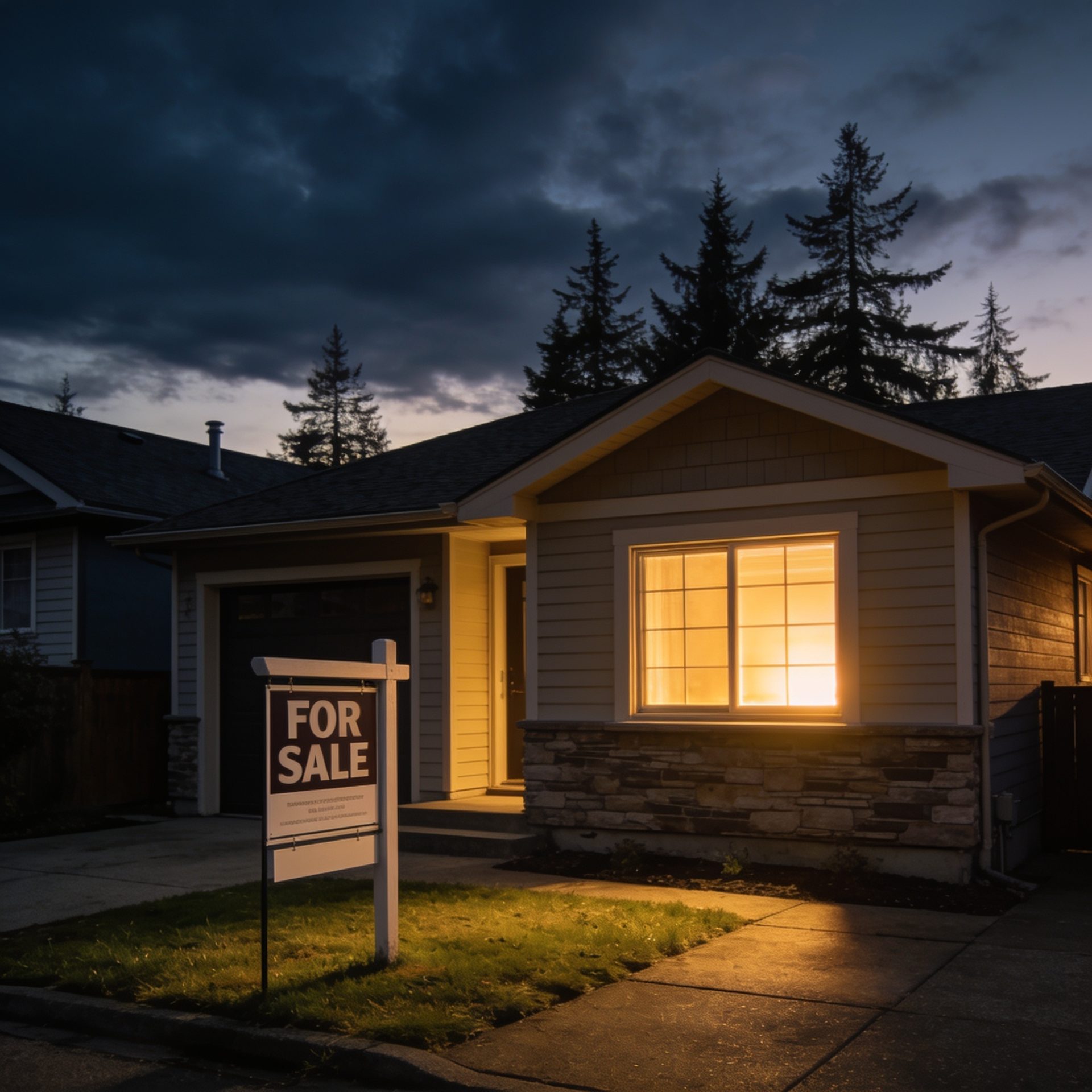
Power of Sale vs Foreclosure: What's the Difference?
The key difference between power of sale and foreclosure comes down to who controls the sale of the property and whether the courts are involved.
Power of Sale (Ontario, Alberta, Atlantic provinces)
Under power of sale, the lender has the contractual right to sell the property directly after the borrower defaults — without going to court. The lender sends a notice of default, waits the statutory period (usually 35 days in Ontario), and then lists and sells the property. The process is faster and less expensive for the lender, but offers less protection for the homeowner.
Judicial Foreclosure (British Columbia, Alberta, Quebec)
In British Columbia, lenders must go through the court system to enforce a mortgage. This is called judicial foreclosure. The lender files a petition with the BC Supreme Court, and the court oversees the entire process — including setting redemption periods, approving sales, and ensuring the homeowner's rights are protected throughout.
BC is one of the few provinces that primarily uses judicial foreclosure rather than power of sale. This means homeowners in BC have more time and more legal protections than homeowners in Ontario.
| Feature | Power of Sale (Ontario) | Judicial Foreclosure (BC) |
| Court involvement | No | Yes — full court process |
| Who sells the property | Lender directly | Court-supervised sale or homeowner |
| Timeline | 3–6 months | 6–18 months |
| Redemption period | Short (35 days typical) | Court-determined (usually 6 months) |
| Homeowner protection | Limited | Strong — court oversees fairness |
| Deficiency (if sale price < mortgage) | Lender can pursue borrower | Lender can pursue borrower |
The BC Foreclosure Process: Step by Step
If a homeowner in BC stops making mortgage payments, here's what happens — and how long each stage takes:
Stage 1: Default (Day 1–30)
When you miss a mortgage payment, you're technically in default from day one. However, most lenders won't take immediate action after a single missed payment. They'll typically contact you to find out what's going on and discuss options. This is the best time to act — see "What to Do If You're Falling Behind" below.
After 15–30 days of missed payments, the lender may send a formal demand letter requiring you to bring the mortgage current within a specific timeframe.
Stage 2: Petition to Court (Month 1–3)
If the default isn't cured, the lender's lawyer files a petition with the BC Supreme Court seeking a "Nisi Order" of foreclosure. This is the formal beginning of the judicial process. The homeowner is served with the court documents and has the opportunity to respond.
Along with the petition, the lender typically registers a Certificate of Pending Litigation (CPL) against the property title. The CPL acts like a lien — it warns any potential buyer or lender that the property is subject to active foreclosure proceedings, which effectively prevents the homeowner from selling or refinancing without dealing with the court process. A homeowner can apply to the court to have the CPL cancelled if it's being used unfairly, but while it sits on title, options narrow considerably.
Homeowners are strongly advised to file a response and appear at the hearing. Ignoring the petition almost guarantees the court grants the lender everything it asks for, including costs. Appearing — even without a lawyer — gives the court a chance to hear your position and often results in a longer redemption period.
Stage 3: Nisi Order and Redemption Period (Month 3–9)
The court issues a Nisi Order, which establishes the amount owed and sets a redemption period. The redemption period is the time the homeowner has to:
- Pay the full amount owing (mortgage balance, interest, legal costs, and penalties)
- Sell the property themselves at fair market value
- Refinance with a different lender (if qualifying is possible — see our bad credit mortgage guide for alternative options)
The redemption period in BC is typically 6 months from the Nisi Order, though the court has discretion to shorten or lengthen it based on circumstances. This is a critical window — it's your last, best opportunity to save your home or sell it on your own terms.
Key point: During the redemption period, the homeowner retains the right to sell the property. Selling yourself almost always results in a higher sale price than a court-ordered sale or a lender-mediated sale. Any equity above the mortgage balance goes to the homeowner, not the lender.

Stage 4: Order Absolute of Foreclosure (Month 6–18)
If the redemption period expires and the homeowner hasn't cured the default, sold the property, or refinanced, the lender can apply for an "Order Absolute of Foreclosure." This transfers the title of the property to the lender. The homeowner loses all rights to the property.
Importantly, in BC, once the Order Absolute is granted, the title transfers to the lender and the mortgage debt is extinguished — meaning the lender cannot pursue the homeowner for any deficiency if the property is later sold for less than the mortgage amount. This is a significant protection compared to power of sale provinces, where the lender can pursue the borrower for any shortfall.
However, this protection only applies to the mortgage being foreclosed. Second mortgages, HELOCs, and other secured debts may still be enforceable. And if there are multiple mortgages, each lender may initiate separate proceedings.
Stage 5: Lender Sells the Property
After obtaining title through the Order Absolute (or during the redemption period with court approval), the property is sold. The proceeds go first to the foreclosing lender, then to any subsequent mortgagees, and finally any remaining balance goes to the former homeowner.
What Triggers Foreclosure?
Foreclosure isn't only triggered by missed mortgage payments. Under most Canadian mortgage agreements, a lender can initiate enforcement proceedings if the borrower:
- Fails to make mortgage payments (the most common trigger)
- Fails to pay property taxes (many mortgages include tax payment as a covenant)
- Fails to maintain adequate property insurance
- Allows the property to significantly deteriorate
- Transfers title without lender consent (due-on-sale clause violation)
- Declares bankruptcy (lender may or may not immediately foreclose, depending on circumstances)
What Foreclosure Actually Costs: The Numbers Nobody Shows You
Foreclosure isn't just losing your home — it's watching your equity get eaten line by line. Here's what typically gets added to the amount you owe once enforcement starts:
- Arrears and accrued interest: every missed payment, plus interest that keeps compounding on the full balance
- Lender's legal fees: petition filing, CPL registration, court appearances — routinely $15,000–$30,000 by the time an Order Absolute is granted, all charged to the homeowner's account
- Property management and upkeep: if the lender takes over maintenance during proceedings, those costs get added too
- Realtor commissions and sale costs: on a court-ordered or lender-mediated sale, standard commissions still come off the top
- Appraisal, title search, and court reporting fees: smaller items that add up to several thousand dollars
Real-world scenario — Surrey, 2026:
A homeowner with a $520,000 mortgage on a $780,000 townhouse stopped paying after a job loss. By month 14 — after legal fees ($22,400), 11 months of accrued interest (~$28,600 at 5.24%), missed payments in arrears ($31,900), and a court-approved sale at $741,000 (5% under market because court-ordered sales attract lowball offers) — here's what was left of their $260,000 in equity:
- Sale price: $741,000
- Less mortgage + arrears + interest: −$604,900
- Less legal and court costs: −$22,400
- Less commissions and sale costs: −$26,700
- Equity remaining to homeowner: ~$87,000
Had they listed the home themselves at month 2 — before the CPL, before the legal fees — the math looks like this: sale at full market ($780,000), less mortgage payout ($520,000), less two missed payments (~$6,200), less a 3-month interest penalty (~$6,800), less commissions and legal (~$28,500) = ~$218,500 net. That's roughly $131,500 more than the foreclosure outcome. (Illustrative figures, but the pattern holds: waiting is expensive.)
That scenario is anonymized but the math pattern is real: legal costs compound, interest never stops, and court-ordered sales routinely clear below fair market value because buyers know the seller is motivated. Every month that passes in the process, the homeowner's net position gets worse — which is exactly why acting in the first 30–60 days matters more than any other decision you'll make.
What to Do If You're Falling Behind
If you're struggling to make mortgage payments, the worst thing you can do is nothing. The earlier you act, the more options you have. Here's the hierarchy of strategies, from least to most drastic:
1. Talk to Your Lender Immediately
Most lenders would rather restructure than foreclose — foreclosure is expensive and time-consuming for them too. Ask about:
- Payment deferral: Skipping 1–2 payments and adding them to the end of your mortgage term
- Term extension: Extending your amortization to lower monthly payments (if you were on an accelerated schedule)
- Rate modification: Some lenders will temporarily reduce your rate during a hardship period
2. Refinance
If you have equity in your home, refinancing can lower your payments by extending the amortization or securing a lower rate. Even if your credit has been damaged by missed payments, B-lenders and equity lenders may be able to help. See our refinance guide for the full process.
3. Use Your Home Equity
If you have significant equity, a HELOC or second mortgage can provide short-term cash flow to get through a difficult period. But this increases your total debt — only do this if you have a realistic plan to restore your income.
4. Sell the Property
Selling your home before the lender forecloses preserves your equity and your credit. A voluntary sale at fair market value will always net you more than a court-ordered or lender-mediated sale. If you're in a mortgage penalty situation, calculate whether the penalty is less than what you'd lose in a foreclosure.
5. Declare Bankruptcy or Consumer Proposal
This is the nuclear option. A consumer proposal or bankruptcy triggers an automatic stay of proceedings, temporarily stopping the foreclosure. But it has severe long-term consequences for your credit and should only be considered with advice from a licensed insolvency trustee.
Who Can Actually Help (and When)
You don't need to face this alone — but you need the right professional at the right stage:
- Mortgage broker (now): before enforcement begins, a broker can shop deferral options, refinance with alternative lenders, or structure an equity-based exit. This is the cheapest window to act in.
- Real estate lawyer (once served): once a petition is filed, you need legal advice on responding, negotiating consent orders, and protecting your redemption rights. BC's Lawyer Referral Service offers initial consultations at a reduced rate.
- Non-profit credit counselling (any time): the Credit Counselling Society (nomoredebts.org) offers free budgeting help and debt management plans — useful when the problem is cash flow, not the mortgage itself.
- Licensed insolvency trustee (last resort): if the debt is unmanageable beyond the mortgage, a trustee can explain consumer proposals versus bankruptcy and what each means for your home.
Book a free consultation → if you're falling behind on mortgage payments — we can help evaluate your options before it reaches enforcement.
Buying a Foreclosed Property in BC
For buyers, court-ordered sales can offer opportunities — but they come with risks. Here's what to know:
Court-Ordered Sales
In BC, court-ordered sales (sometimes called "foreclosure sales") happen when the lender or the court lists the property for sale during the foreclosure process. These sales require court approval — the buyer's offer must be approved by a judge at a hearing.
- Potential deals: Court-ordered sales can be priced below market value because the lender wants to recover the mortgage amount quickly
- As-is condition: Properties are sold "as is, where is" — no warranties on condition, and the seller (usually the lender or court) won't make repairs
- Subject-free offers: Court-ordered sales typically require unconditional offers — you can't make the purchase subject to financing, inspection, or other conditions
- Court hearing: The purchase must be approved at a court hearing where other buyers can potentially show up and bid higher
Risk warning: Court-ordered sales in BC carry significant risk. You must have financing pre-arranged and be prepared to close without conditions. Always get a professional home inspection before making an offer — even though the offer itself will be unconditional. Budget for potential repairs and deferred maintenance.
How Foreclosure Affects Your Credit
A foreclosure (or a court-ordered sale resulting from foreclosure proceedings) has a severe impact on your credit:
- The mortgage default is reported to both credit bureaus (Equifax and TransUnion)
- Each missed payment leading up to the foreclosure is recorded as a late payment
- The foreclosure stays on your credit report for 6–7 years
- Your credit score can drop 100–160 points
- Getting a new mortgage after foreclosure is difficult but not impossible — most A-lenders require 4–7 years of clean credit history, while B-lenders and private lenders may consider you sooner at higher rates
The Bottom Line
BC's judicial foreclosure process is designed to protect homeowners while ensuring lenders can recover their funds. The 6–18 month timeline and court oversight give homeowners multiple opportunities to cure the default, sell the property on their own terms, or restructure their finances.
If you're behind on payments, don't wait. Every day you delay reduces your options. Contact your lender, speak with a mortgage broker about restructuring, and if necessary, consult a lawyer who specializes in real estate litigation. The earlier you act, the more likely you are to save your home — or at least walk away with your equity and your credit intact.
Struggling with mortgage payments? Apply now for a confidential consultation, or call us at 604-593-1550. We help homeowners explore refinancing, restructuring, and alternative lending options before enforcement begins.
Frequently Asked Questions
Does BC use power of sale or foreclosure?
British Columbia uses judicial foreclosure, not power of sale. This means lenders must go through the BC Supreme Court to enforce a mortgage, and the court oversees the entire process. Homeowners get court-determined redemption periods (typically 6 months) during which they can cure the default, sell the property, or refinance. Power of sale (used in Ontario) allows lenders to sell without court involvement.
How long does foreclosure take in BC?
The full foreclosure process in BC typically takes 6 to 18 months from the first missed payment to the Order Absolute of Foreclosure. The timeline depends on court scheduling, the redemption period set by the judge, and whether the homeowner contests the proceedings or works to resolve the default during the process.
Can I save my home during foreclosure in BC?
Yes. Throughout the process, and especially during the redemption period (typically 6 months), you can save your home by paying the full amount owing, selling the property yourself, or refinancing with a different lender. You can also negotiate with your current lender for payment modifications. The earlier you act, the more options you have.
What happens to my equity if my home is foreclosed?
If the property is sold for more than the mortgage balance plus legal costs and penalties, the remaining funds go to you (after any second mortgages or liens are paid). However, if the sale price is less than what you owe, the lender may pursue you for the deficiency — unless the court has granted an Order Absolute of Foreclosure, which extinguishes the mortgage debt. In BC, the Order Absolute typically protects you from deficiency claims by the foreclosing lender.
Can I buy a foreclosed home in BC?
Yes, through court-ordered sales. These properties are listed publicly and require your offer to be approved by a judge at a court hearing. Court-ordered sales are typically sold "as is" with no conditions (no financing, inspection, or subject clauses). Other buyers can appear at the court hearing and bid higher, so there's no guarantee your offer will be accepted.
Will foreclosure ruin my credit?
Foreclosure significantly damages your credit — your score can drop 100–160 points, and the foreclosure stays on your credit report for 6–7 years. Each missed payment leading up to foreclosure is also recorded. However, you can rebuild your credit over time, and B-lenders or private lenders may consider your mortgage application 2–3 years after foreclosure, depending on your circumstances.
What's the difference between a court-ordered sale and a power of sale?
A court-ordered sale (BC) requires judicial approval — a judge must approve the sale and the sale price, and the homeowner has redemption rights throughout. A power of sale (Ontario) allows the lender to sell the property directly without court involvement, after providing the required notice period. Court-ordered sales are slower but offer more protections for homeowners; power of sale is faster but gives lenders more control.
Related Reading
About Varun Chaudhry
Licensed mortgage broker with over 18+ years of combined experience in the Canadian mortgage industry. Specializing in MLI Select, construction financing, and self-employed mortgages across BC, AB, and ON.